2026-09-22 · 8 min read
Why Professional Audio Post Production in Johannesburg Makes or Breaks Your Event Video
Audio post production is the stage that separates professional event video from amateur footage — and most clients never see it happening.
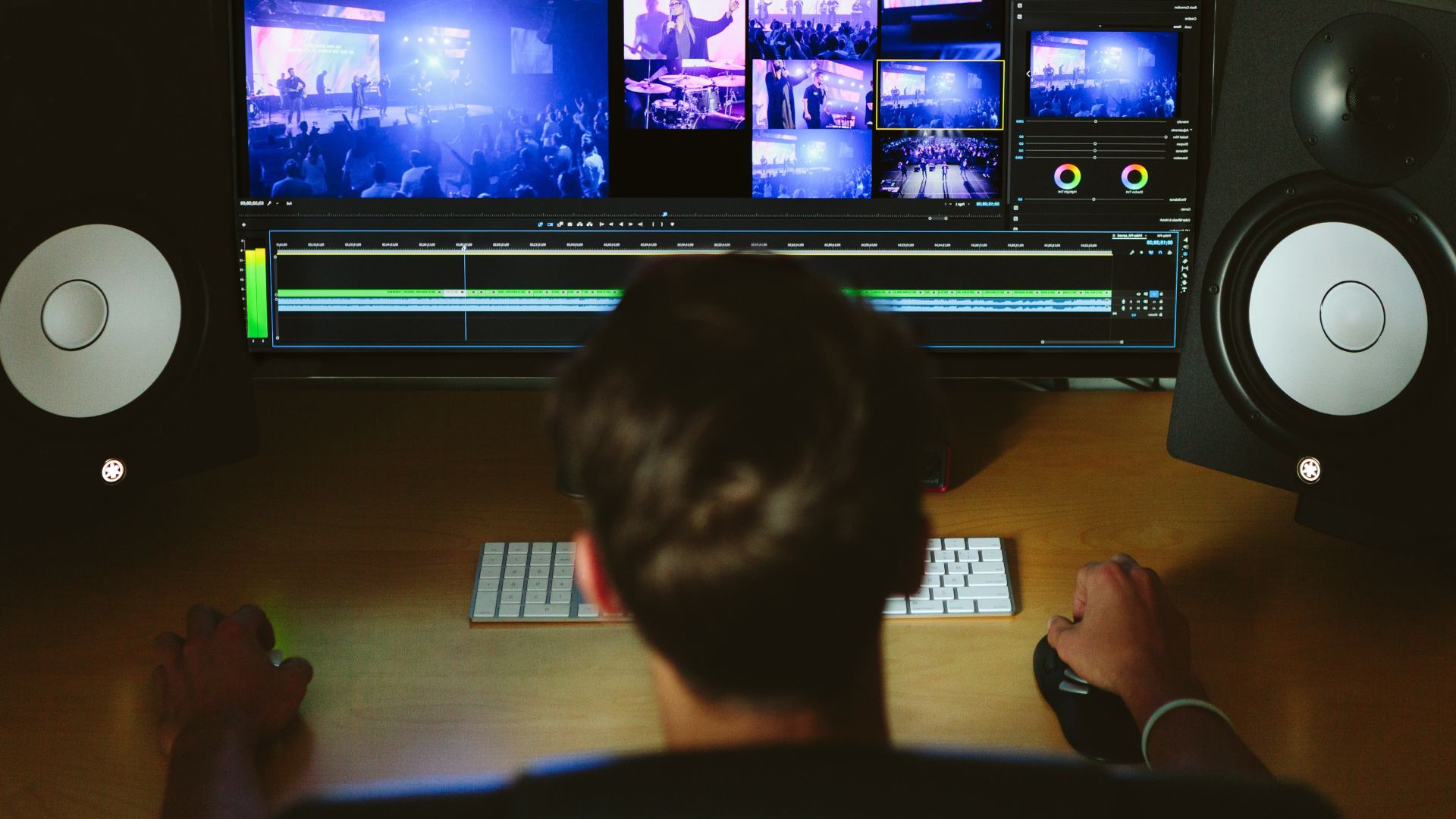
Audio post production in Johannesburg is the stage that separates professional event video from amateur footage, and most clients never see it happening. By the time a video is delivered, the audio has been edited, cleaned, mixed and mastered by a dedicated engineer. When that process is done properly, you never notice it. When it is skipped or rushed, you notice immediately.
This guide explains what professional audio post production for event video actually involves, what it costs a brand when it is handled poorly, and why the audio decisions made during production determine how much can be recovered in post.
What Audio Post Production Is
Audio post production is the process of editing, mixing and mastering all sound elements in a video after the footage has been captured. For event video, this includes dialogue from speakers and panellists, ambient room sound, any music or stings, voiceover where applicable, and the overall level and quality of the final audio mix delivered with the finished programme.
Audio work occurs throughout pre-production, production and post-production. The stage that most determines the quality of the final output, however, is post — where the raw captured audio is shaped into something that communicates clearly, sounds professional, and holds up across different playback environments.
Dialogue Editing
Every word spoken at your event needs to be intelligible. Dialogue editing involves cleaning up the captured speech: removing unwanted noise, correcting levels, cutting dead air, and ensuring every speaker is heard clearly regardless of where they were positioned or how the room acoustics behaved. In a conference or live event environment, this is frequently the most labour-intensive stage of audio post.
Noise Reduction and Room Treatment
Live event environments are acoustically complex. HVAC systems, crowd noise, feedback from the PA system, microphone handling noise and the natural reverb of a large venue all appear in the captured audio. Professional noise reduction tools and careful editing remove these elements without degrading the speech they surround. The result is dialogue that sounds clean and close even when it was recorded in a large, noisy room.
Mixing
The mix stage is where dialogue, music, sound effects and ambient audio are balanced into a single coherent output. Each element is given its appropriate level, EQ treatment and dynamic range. Dialogue is typically used as the loudness reference, with music and effects mixed around it so they support rather than compete with the speech.
A poorly mixed event video is immediately recognisable: music that overpowers the speakers, ambient noise that surges during cuts, or a dialogue level that forces viewers to keep adjusting their volume.
Mastering for Distribution
Once the mix is finalised, the audio is mastered for the delivery format. Broadcast standards, streaming platforms, social media and in-room playback all have different loudness specifications and technical requirements. A professional master ensures the audio meets those standards and translates consistently across the devices and platforms your audience will use to watch the content.
What Poor Audio Post Production Costs a Brand
Footage with poor audio cannot be repurposed. A keynote address with echoey, unbalanced sound cannot be used in a marketing reel, shared with media, or published for on-demand viewing without significant remediation. If the audio cannot be fixed in post, the content has no commercial life beyond the event itself.
Professional audiences notice audio quality immediately. A corporate video with poor sound communicates poor production values regardless of how good the picture looks. For brands projecting authority, expertise or premium positioning, amateur audio directly contradicts the brand's stated identity.
Content distributed with poor audio also fails technical quality checks on broadcast platforms, streaming services and media outlets. A highlight reel submitted to a broadcaster with audio that does not meet loudness standards will be rejected.
Why Capture Quality Determines Post Production Outcomes
Audio post production can achieve a great deal. It cannot fix audio that was fundamentally not captured properly. A poor source recording — from a camera-mounted microphone picking up room reverb from 20 metres away, or a lapel mic positioned incorrectly — sets a ceiling on what post can produce.
This is why the audio setup at the point of capture matters as much as the post production process. A dedicated audio engineer managing a professional sound desk during the event, with properly positioned microphones and a clean signal chain, gives the post production team the material they need to produce a broadcast-quality result. A camera-mounted microphone does not.
Mushroom Motion productions include dedicated audio engineering at every event — a separate audio engineer running a professional desk independently from the camera operation. That captured audio is then handled in post by experienced audio engineers who understand broadcast delivery standards.
What Professional Audio Post Production Looks Like in Practice
Every Mushroom Motion production includes audio post as part of the standard delivery. The captured audio from the event is edited, cleaned, mixed and mastered before the final programme is delivered. The result meets broadcast loudness standards and is suitable for distribution across streaming platforms, broadcast outlets, social media and in-room playback.
The same audio workflow applied to arena broadcasts and streaming productions is applied to corporate event video. That consistency is only possible because audio is treated as an equal discipline to camera work from the moment the event begins, not as a problem to solve in post.
Frequently Asked Questions
What is audio post production for event video? It is the process of editing, cleaning, mixing and mastering all sound elements captured at a live event after the footage has been recorded — dialogue editing, noise reduction, room treatment, level balancing, music mixing and mastering for the delivery format.
Can poor audio be fixed in post production? It can be improved significantly, but there is a ceiling defined by the original capture. Excessive room reverb, signal distortion and very low signal-to-noise ratios have limited remediation options.
What is the difference between mixing and mastering? Mixing balances all audio elements into a single coherent output. Mastering refines and optimises that mix for the intended delivery platform, ensuring it meets broadcast loudness standards.
Why does event video often have poor audio? Because audio is treated as secondary to camera work during production. Camera-mounted microphones, no dedicated audio engineering and no separate broadcast mix from the in-room PA all produce footage that is difficult to remediate.
Does Mushroom Motion handle audio post production? Yes — it is included as standard on every production, delivered to broadcast loudness standards suitable for all platforms.
Explore More
- Our video production services — multicam, live streaming, conference and concert coverage.
- See our recent work — selected broadcast, concert and brand film projects.
- Get in touch — brief the Mushroom Motion crew on your next production.
Related Articles
Sports Broadcasting in Cape Town and South Africa: What Rights Holders Should Look for in a Production Partner
Rights holders, federations and leagues are commissioning their own broadcasts — the quality of production now determines the value of the rights themselves.
In-House vs Outsourced Corporate Video: What South African Brands Should Know
Build an internal video capability or bring in a specialist crew? Both models have merit — here are the trade-offs marketing teams rarely see spelled out.
Live Streaming for Hybrid Corporate Events: A Practical Setup Guide
Hybrid corporate events run two productions at once — the room and the stream. Here's the technical stack, redundancy and planning that keeps both broadcast-grade.